

I walked into “Spider-Man: Brand New Day” fully braced for the usual Marvel homework. Twenty years of continuity, a guest list longer than a royal wedding, and that familiar low hum of wondering which Disney+ series I forgot to watch. There’s Jean Grey, Hulk, Punisher, and a guy I mostly know as Milchick from “Severance” standing in yet another sterile room being vaguely ominous.
On paper, this thing should feel enormous, yet “Brand New Day” somehow feels smaller and more personal than Marvel has in years. It feels more like a story about one lonely guy than a story about a franchise, which is a strange thing to say about a film with this many people in it. For all the Marvel connective tissue wandering through the frame, the movie still feels like it belongs to Peter Parker.
The consequences of “No Way Home” obviously hang over everything. Peter let everyone he loved forget who he was, but the spell itself isn’t really what keeps him alone anymore. He had the chance to reconnect and rebuild his closest relationships, but instead he decides distance is safer than risking what might happen if he lets them back in.
That landed closer to home for me than I expected from a Spider-Man movie. We live in a time when it’s easier than ever to reach almost anyone, yet real connection can still feel harder to find. Peter’s surrounded by an entire city, but emotionally he’s made himself invisible. Sometimes loneliness has less to do with who’s around us and more to do with how much of ourselves we’re willing to let them see.
What I didn’t fully appreciate until I thought about the movie afterward was how carefully “Brand New Day” surrounds Peter with people who challenge that private story he’s telling himself. The crossovers that worked weren’t the ones that made Peter’s world bigger. They were the ones that reflected something back about Peter himself, and that’s where one of my favorite storytelling tools comes into play.
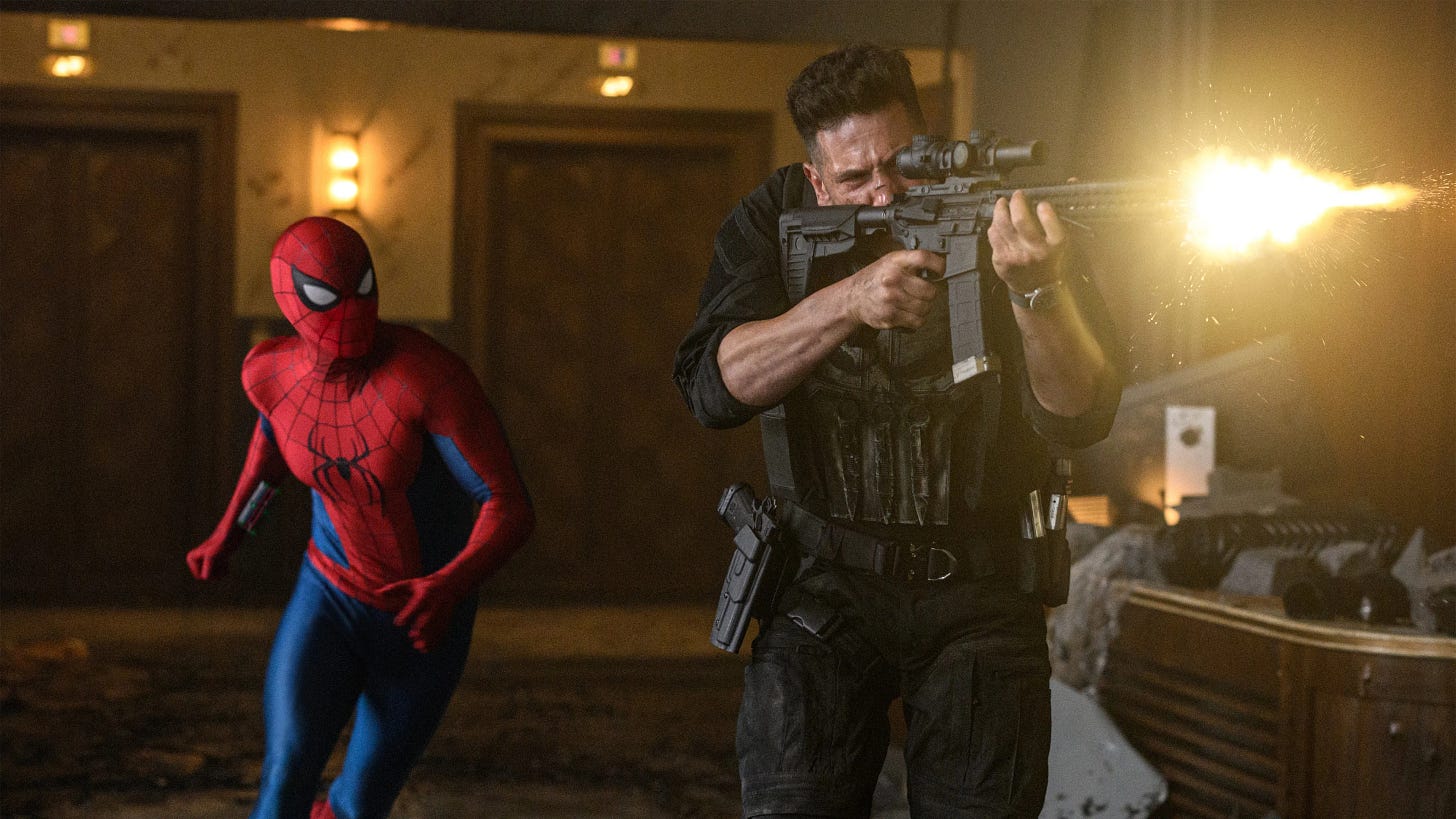
The mirror with a crack in a different place
The tool is called a character foil, and it’s one of the oldest, most reliable tricks in the storytelling kit. A foil is basically a human comparison chart. You take two people who’ve faced similar pressure, let them make different choices, and the contrast becomes its own explanation. The funny thing is, they don’t have to be complete opposites. Sometimes the most interesting foil is somebody who looks strangely similar to the hero until you reach the decision where their paths split. Same wound, different scar. Same fork in the road, different turn.
Frank Castle is probably the cleanest example because he and Peter have more in common than you might initially think. They’re both New York vigilantes shaped by devastating loss, both operating outside the traditional system, and both convinced, in their own way, that they’re protecting people.
Then look at where they split. Despite everything, Peter’s still desperately white-knuckling his compassion, trying to be the guy who catches you before you hit the pavement. Spider-Man obviously isn’t opposed to throwing a punch, but violence has never been the thing that defines him.
Frank, by contrast, has traveled a long way down the other road, where vengeance slowly takes the wheel. He’s a man shaped by remarkably similar pain who arrived at a very different answer. Frank feels like a preview of the man Peter could become if isolation and grief ever finished the job. That’s a foil earning its keep. It turns character into comparison, and comparison is a whole lot more convincing than an unnecessary monologue.
The best supporting characters don’t pull focus away from the hero; they sharpen our understanding of him.
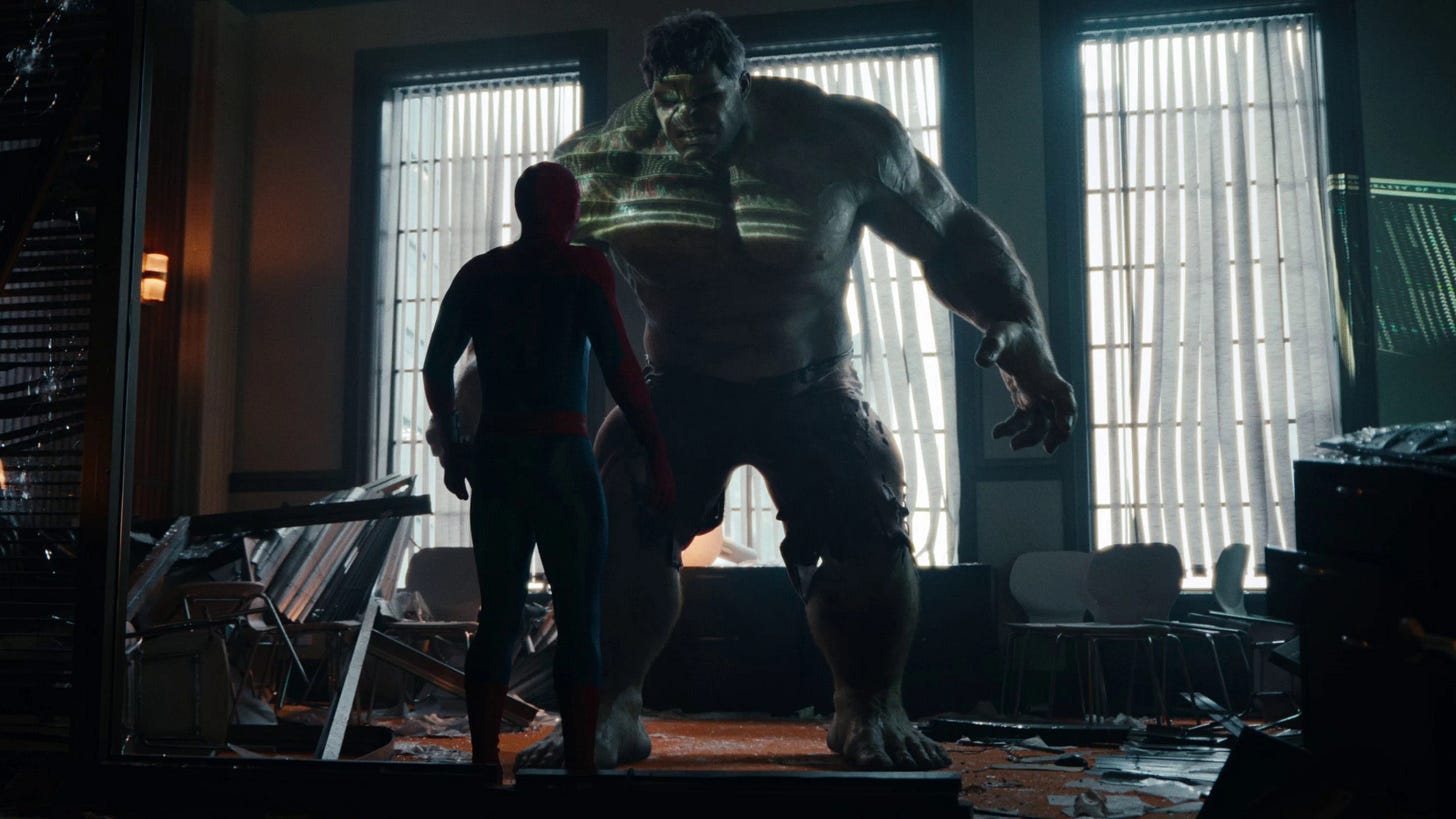
Failing the Hulk Test
This is where Bruce Banner became surprisingly useful to me, although maybe not in the way the movie intended. Once I started looking at the supporting cast through this foil idea, I realized why Bruce never felt quite as necessary. It isn’t that Hulk is boring. It’s that standing him beside Spider-Man doesn’t teach me anything new about Peter, and that’s a meaningful difference from what happens with Frank.
There’s no shared wound to line up, no fork in the road, no version of Peter’s future staring back at him from across the room. He’s a great character parked in a fun scene, not a mirror. If you quietly deleted him, I’d understand Peter exactly as well as I did before, and I’d honestly have traded the whole appearance for some “Thor: Ragnarok”-style banter between Holland and Hulk. In fact, I wish the movie had done more with that pairing.
Now run that same test on Frank and you lose the clearest picture of the man Peter’s fighting not to become. That’s how you know a crossover is doing real work instead of simply waving at the crowd. So the question becomes: if you removed this person, would you understand the hero any less?
You can see the same trick everywhere. Rocky needs Apollo Creed because Apollo reveals what Rocky lacks and what he might become. Batman gets more interesting when another character survives comparable trauma but draws a different moral line. Rom-coms pull the same move with the best friend who treats love like a completely different sport, while family dramas do it with siblings raised under the same roof who somehow became opposite adults. Same pressure, different people, and the gap between them can tell you more than dialogue ever could.
That feels especially useful for the MCU because Marvel has spent almost twenty years building a universe where we’ve come to expect practically anyone to stroll through the door. But once crossovers become normal, simply having somebody show up isn’t enough to make the moment matter. The more interesting question becomes why this particular character belongs in this particular hero’s story.
Frank belongs because he’s a mirror. Hulk is a delight who happened to be in the building, and the difference between them gets at what makes a crossover actually matter. Sometimes making the world feel smaller is exactly how you make the person inside it matter more. And in a universe where practically anybody can walk through the door, maybe the better question isn’t who would be exciting to see, but who actually needs to be standing on the other side.
Thanks for sticking with me all the way to the end. At this point, we’re basically movie friends, so you might as well subscribe and make it official.
You can also find me on Letterboxd for shorter reviews, ratings, and plenty of films that may never make it over here.
Images note: Unless otherwise credited, all images are from Spider-Man: Brand New Day (2026) and are reproduced for purposes of criticism and commentary. Copyright remains with the applicable rights holder(s).
Editor’s Note: This essay reflects Corbin Schweitzer’s personal perspective as a filmmaker, and member of the KDMG creative team.